 Week of October 11 · Calgary
Worth stepping outside for
Happening now
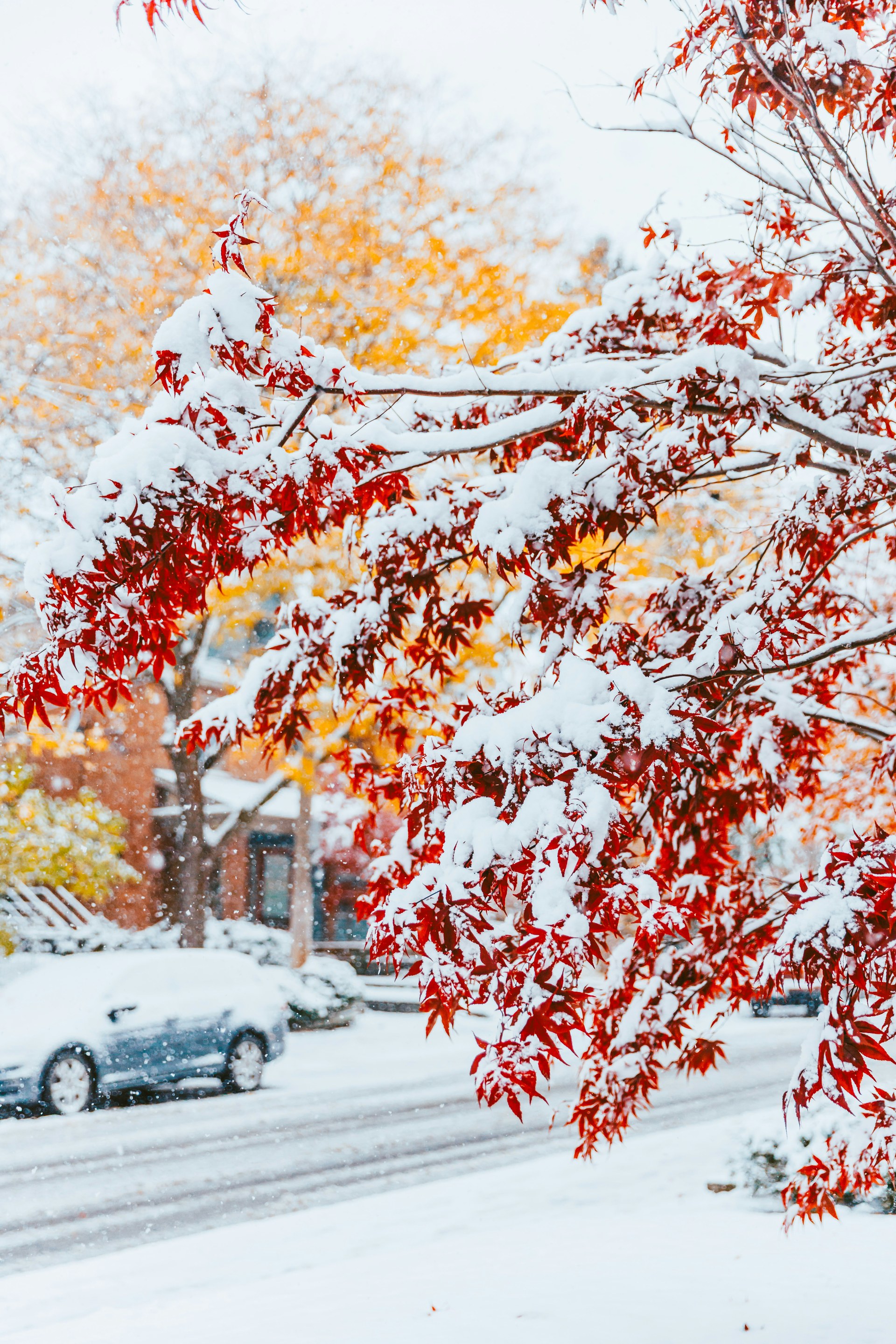
Snow before the leaves are down
The first snow of the year usually shows up while the trees still have most of their leaves, and it usually doesn't stay. The ground is still holding the summer's heat, so it melts from underneath within a day or two and the grass comes back green, which is why the first fall is something to go and look at rather than something to dig out. Wet snow loading a canopy that's still in leaf is what snaps limbs off full-grown trees, and on a quiet morning you can hear it happen. And it is the first day of the year you can read the ground: every rabbit, squirrel, magpie and neighbourhood cat that crossed your yard in the night has left its route written across it in a line of prints, and by noon both the prints and the snow are usually gone.
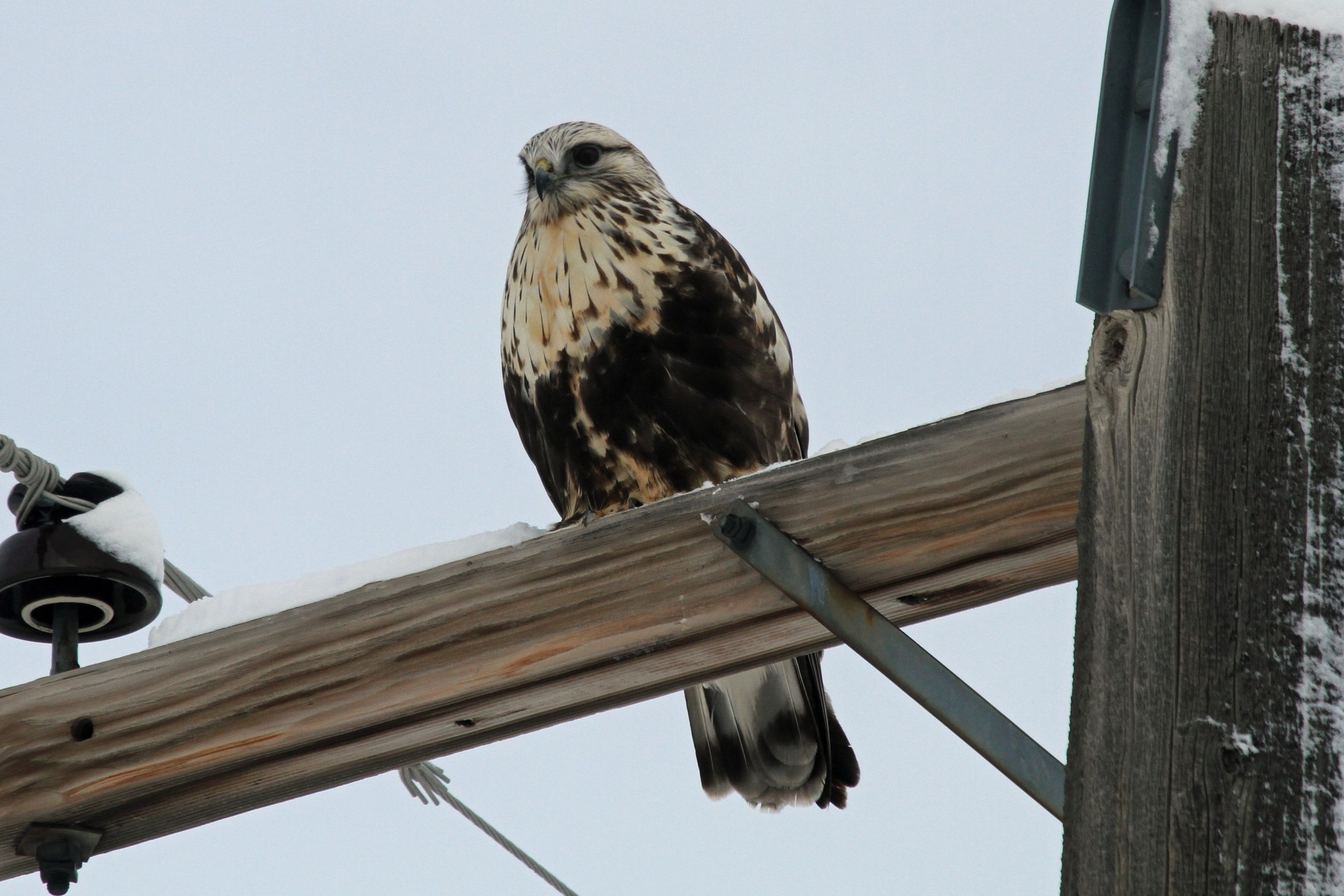
A new hawk on the post
The big hawk on the fence post is not the one that sat there all summer. The summer hawks have gone south, and rough-legged hawks have come down from the Arctic tundra where they nest to spend the winter on open farmland. For a bird raised north of the treeline, a frozen stubble field is the warm south. Its legs are feathered right down to the toes, which is where both of its names come from (lagopus is Greek for "hare-footed"). The easy way to know one is to watch it hunt: a rough-legged hawk will stop in mid-air and hang over one spot with its wings beating, and it is the only hawk of its size that does that regularly. Their numbers in the north rise and fall with the lemmings and voles they eat, so some winters bring more of them than others.
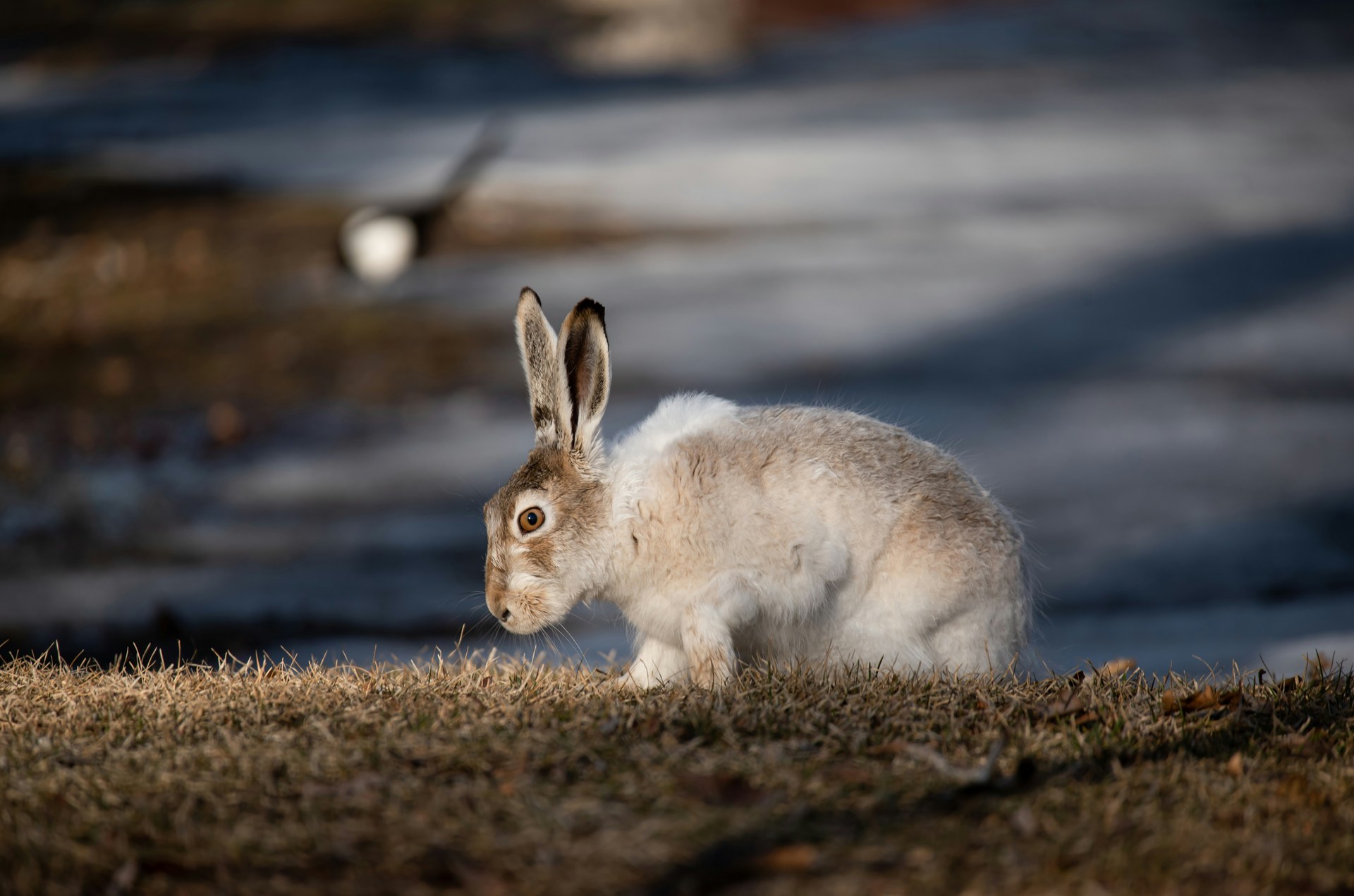
The hares are turning white
Hares are swapping their brown summer coats for white ones, and for a few weeks they are a patchwork of both. The change is set off by the shortening days, not by snow or cold, so it runs on very nearly the same dates every year. Researchers who followed snowshoe hares through the moult found it takes about 40 days, and that a snowy autumn or a bare one made no difference to when it happened. The snow keeps no such schedule. So in a late autumn you get a bright white hare sitting on brown grass, and the same study found the hares do nothing about it: they don't hide any better and they don't run any sooner. Whether a white-tailed jackrabbit turns white at all is inherited, and it follows how snowy its home ground is, so in places with little snow they stay brown all winter.
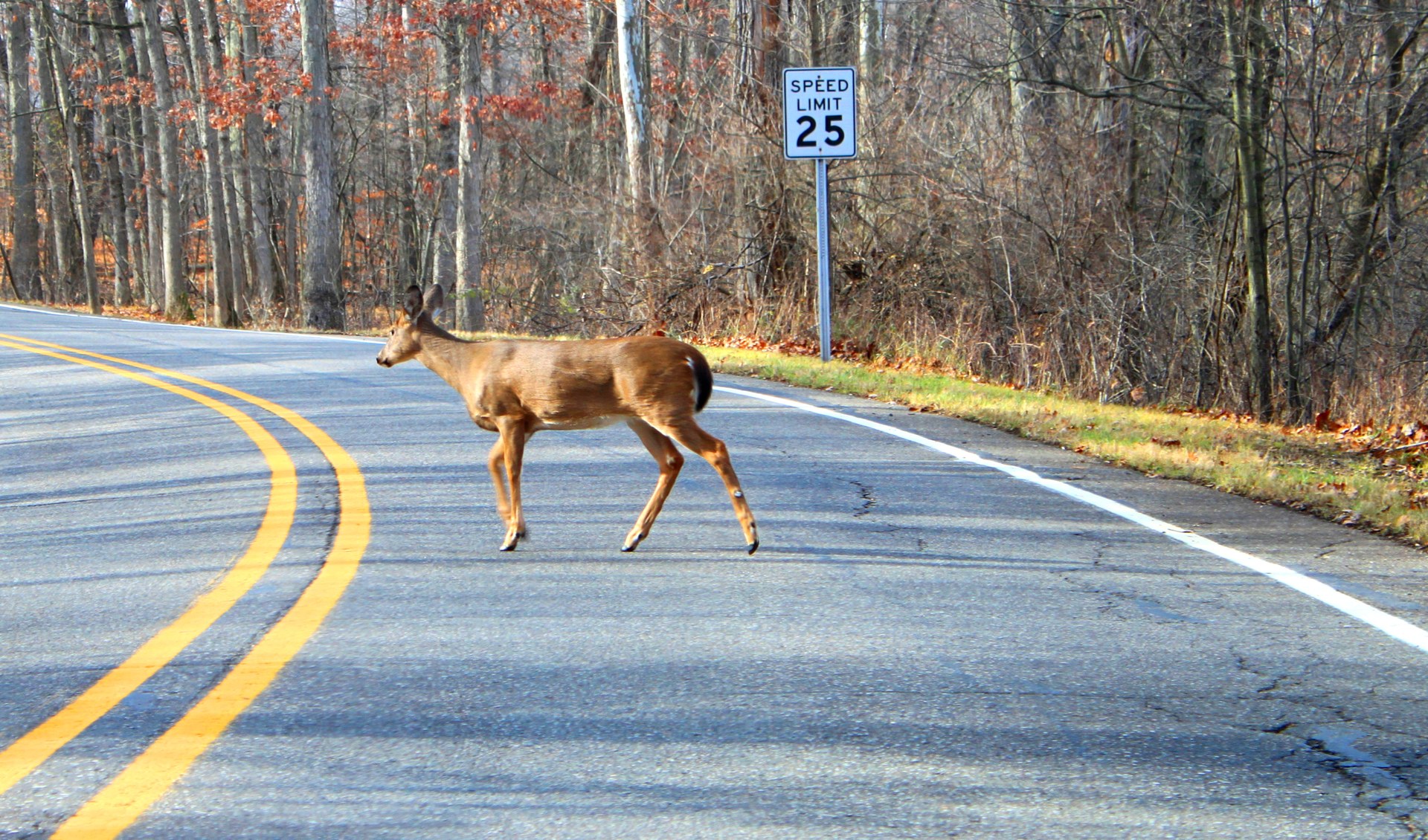
Deer are on the move
Deer are turning up on roadsides and in ditches more than at any other time of year. It is the rut: bucks are covering a lot of ground after does, at all hours, and paying very little attention to anything else. November is the worst month of the year for collisions between vehicles and deer, and the clocks make it worse. When they go back an hour at the start of the month, the drive home moves into the dark overnight, in the same weeks the deer are moving most. A deer on the road is rarely alone, so when one crosses in front of you, watch for the next one behind it.
Snow geese are passing over
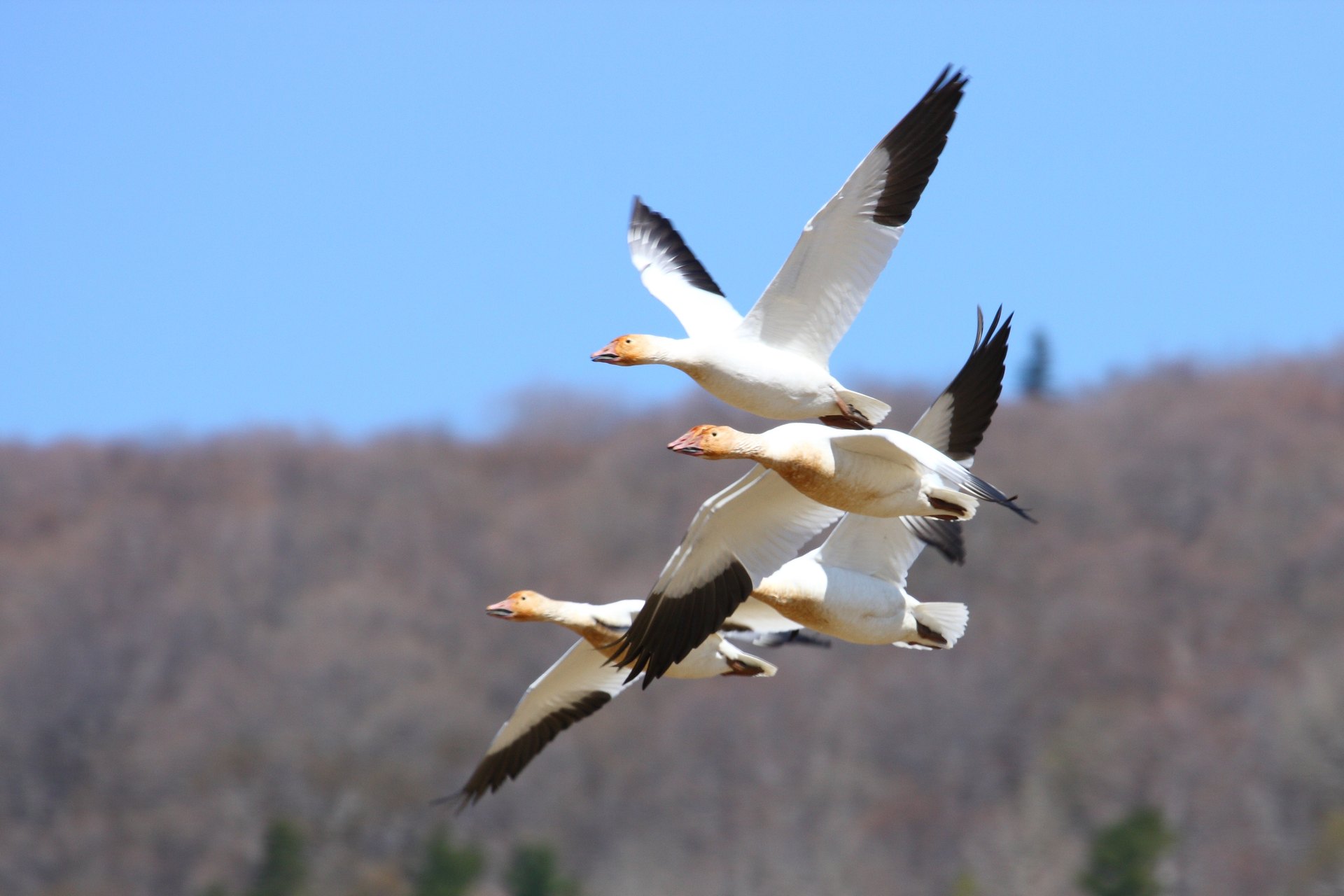
If you hear a high, yelping chatter somewhere overhead, look up for long wavering lines of white birds with black wingtips. Those are snow geese, on their way from Arctic nesting grounds to farm country far to the south, and the fall passage is fast: the heaviest movement fits inside about a month, often hundreds of birds at a time. A few birds in the line are dark grey with white heads, and for about two hundred years those were counted as a separate species, the blue goose (the dark form was named first, which is why the scientific name caerulescens means "bluish"). They are one species in two colours, and a young goose usually picks a mate the colour of the family that raised it. Tundra swans follow a week or so behind, bigger, all white, and higher pitched.
Red and black on warm walls
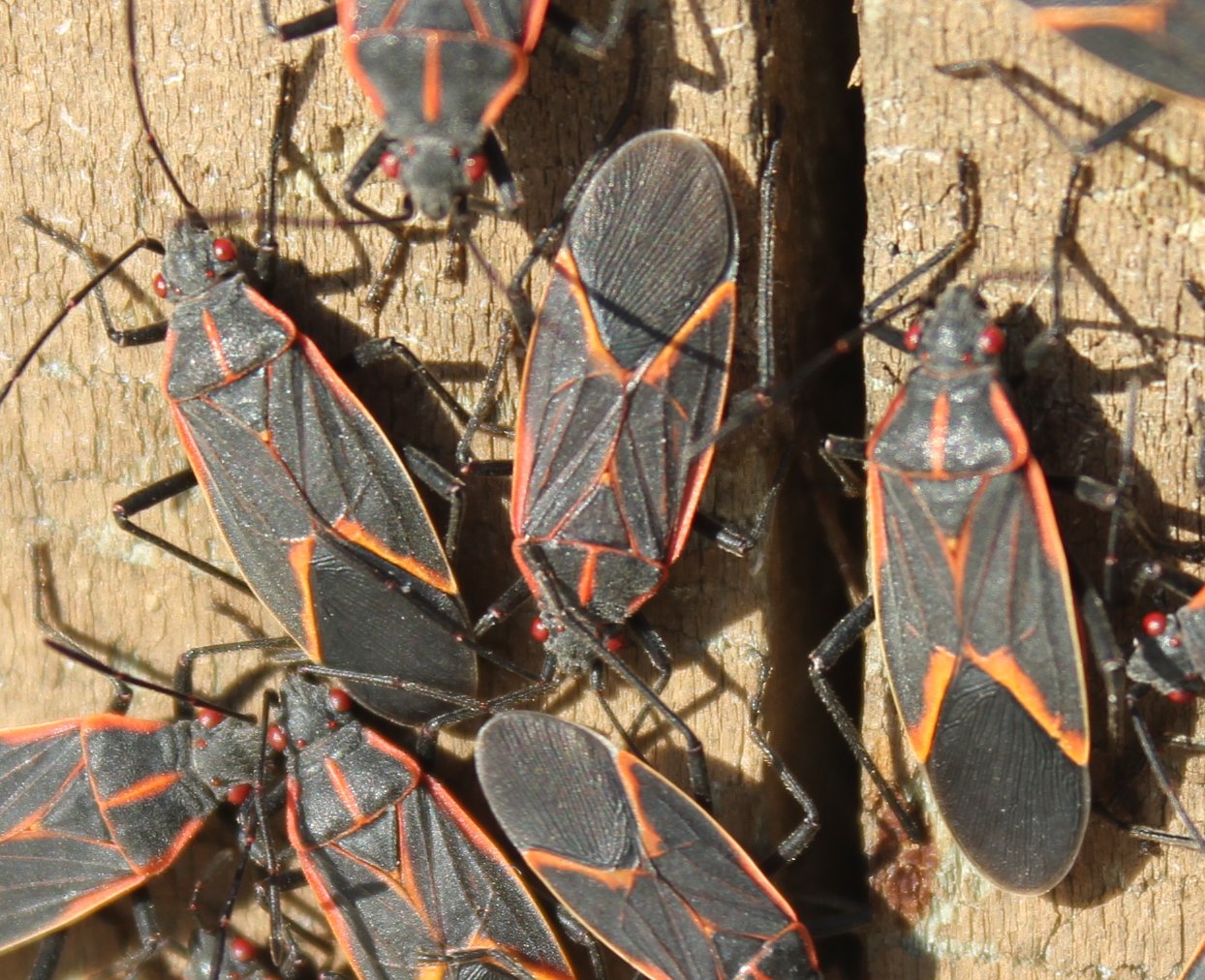
On the first properly cool days of autumn the sunlit side of a house, a fence or a tree trunk can go dark with flat oval insects, black with three thin red lines down the back and red along the edges. These are boxelder bugs, and they are there for the heat. They are cold-blooded, a wall facing the afternoon sun is the warmest surface around, and they are gathering before they go looking for somewhere to spend the winter, which is usually a crack in bark or a gap under someone's siding. They live almost entirely on box elder, the fast, weedy maple that towns planted by the thousand and that many people know as Manitoba maple. They feed on the leaves and seed pods of the female trees, so a wall covered in them is nearly always a wall near a tree carrying seeds. They don't bite, they don't eat the house, they do no real harm to the tree and they cannot breed indoors. The only true complaint against them is the smell if you crush one, which is a good argument for moving them with a broom.
Aurora season is reopening
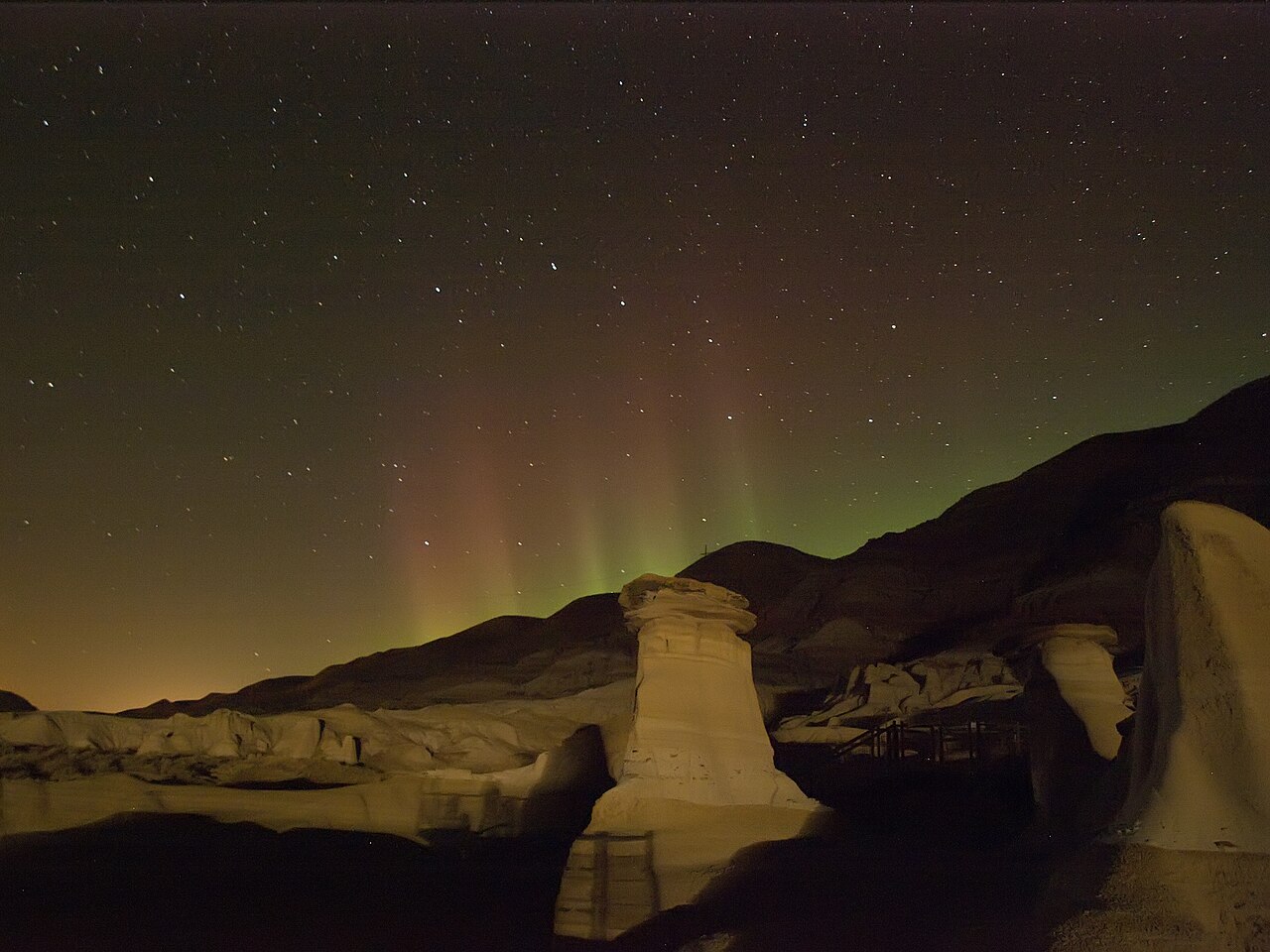
Summer nights at this latitude are finally getting dark enough for northern lights again. From now until spring, every clear night is a candidate, and autumn is statistically one of the best aurora seasons of the year. Worth scouting your north-facing spot now, before the first good storm.
Also this week
tap for the full story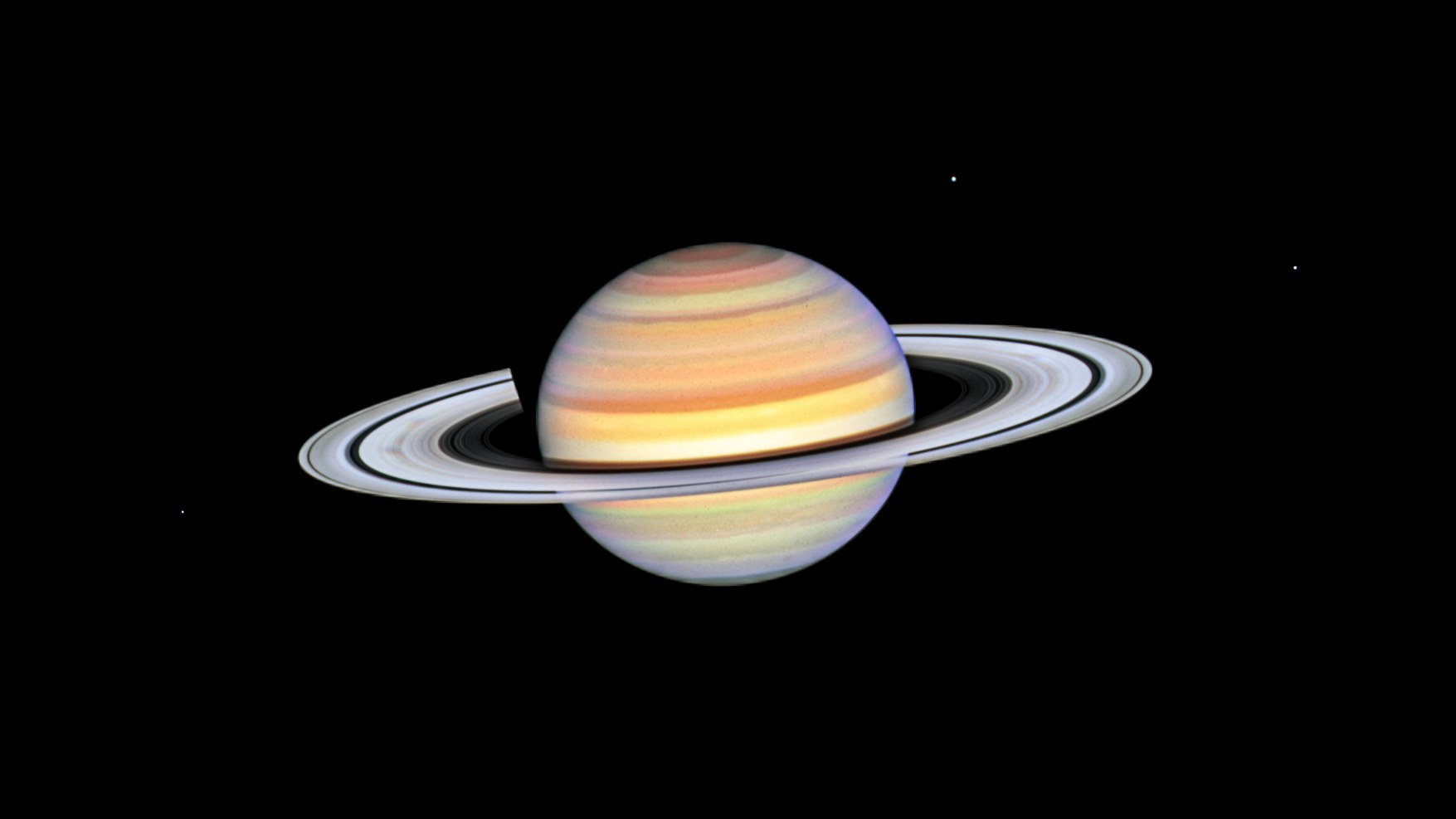
That bright light is Saturn
Still close to as bright as it gets this year, and the moon is out of the evening sky all week. Monday evening is forecast clear, and it is the steady light in the southeast once it is dark